Amazon keyword research has one beautiful property: everyone searching is holding a wallet. There are no idle browsers typing "yoga mat with strap for wide shoulders" for fun.
The free method mines Amazon's own suggestion box, because that box is a live feed of what shoppers want to buy in their own words.
Why Amazon's suggestions beat any external tool
Amazon autocomplete is generated by Amazon shoppers, ranked by Amazon's interest in selling things. It encodes demand, phrasing and product features simultaneously.
Type "yoga mat " and the completions are a market research report: thickness numbers, materials, "with strap", "for kids", "non slip". Each suggestion is a feature shoppers filter by.
Mining suggestions at scale
Letter-by-letter manual mining works but crawls. The Amazon tab on this site's tool automates it: seeds in, hundreds of real Amazon suggestions out, free.
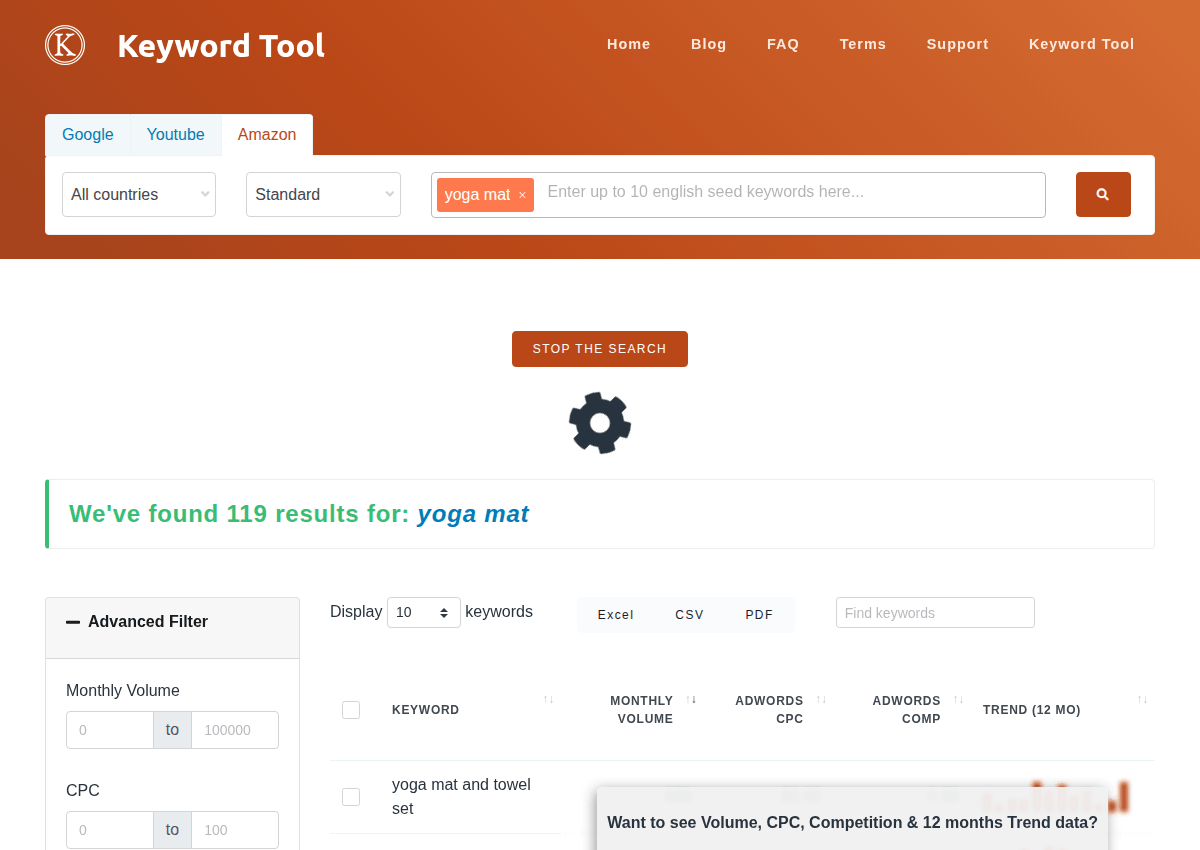
Seed with your product type, then again with audience and problem variants: "yoga mat", "yoga mat for", "yoga mat with", "yoga mat no". The prepositions unlock the feature tail.
Reading the patterns
Amazon suggestions sort themselves into four buckets, and each bucket maps to a listing decision:
| Pattern | Example | What it tells you | Where it goes |
|---|---|---|---|
| Feature | "yoga mat extra thick" | Specs shoppers filter by | Title + bullets |
| Audience | "yoga mat for kids" | Segments worth targeting | Bullets, maybe a variant |
| Problem | "yoga mat non slip" | The worry to answer | Title if you solve it |
| Occasion | "yoga mat gift set" | Seasonal packaging angles | Backend terms |
If a feature keeps appearing in suggestions and your product has it, it belongs in the title. Shoppers search their filters.
Where the keywords go
The backend field is for the phrasings that would embarrass the listing: misspellings, awkward word orders, regional synonyms. Invisible to shoppers, indexed by Amazon.
Ranking the candidates without paid volume data
Amazon publishes no keyword volumes, so free ranking uses two proxies. Suggestion position: phrases appearing after one letter out-demand phrases needing six.
And result counts: a phrase returning 200 products is a niche, 40,000 is an ocean. Pair high suggestion rank with modest result counts and you have found the pocket.
Google volumes from our free stack add background context for product terms, and paid suites like Helium 10 or Jungle Scout sell Amazon-specific estimates when you outgrow proxies.
The refresh habit
Amazon suggestions move with the market: new features, new worries, seasonal phrasings. Re-mine your seeds quarterly and before Q4, and update bullets when a new pattern earns its place.
Fifteen minutes a quarter keeps the listing speaking this year's shopper language.
The one-line takeaway: Amazon's suggestion box is free market research written by buyers. Mine it in bulk, sort the patterns into features, audiences, problems and occasions, and place each phrase once where it counts.