YouTube keyword research answers one question before you spend a day filming: do people actually search for this, in these words, on YouTube?
The method is five steps, all free, and it starts from the only honest source there is: YouTube's own search box.
Step 1: Seed from your niche, not your video idea
Start with 5 broad seeds for your channel's territory: for a coffee channel, cold brew, espresso, coffee beans, pour over, coffee gear.
Seeding from the niche instead of one video idea matters because step 2 will show you which specific videos the audience wants. Let demand pick the topic, not the other way around.
Step 2: Mine YouTube's autocomplete
YouTube suggestions are real YouTube searches, phrased the spoken way. "Cold brew" suggests "cold brew at home", "cold brew without a maker", "cold brew mistakes" and each is a video topic with proven demand.
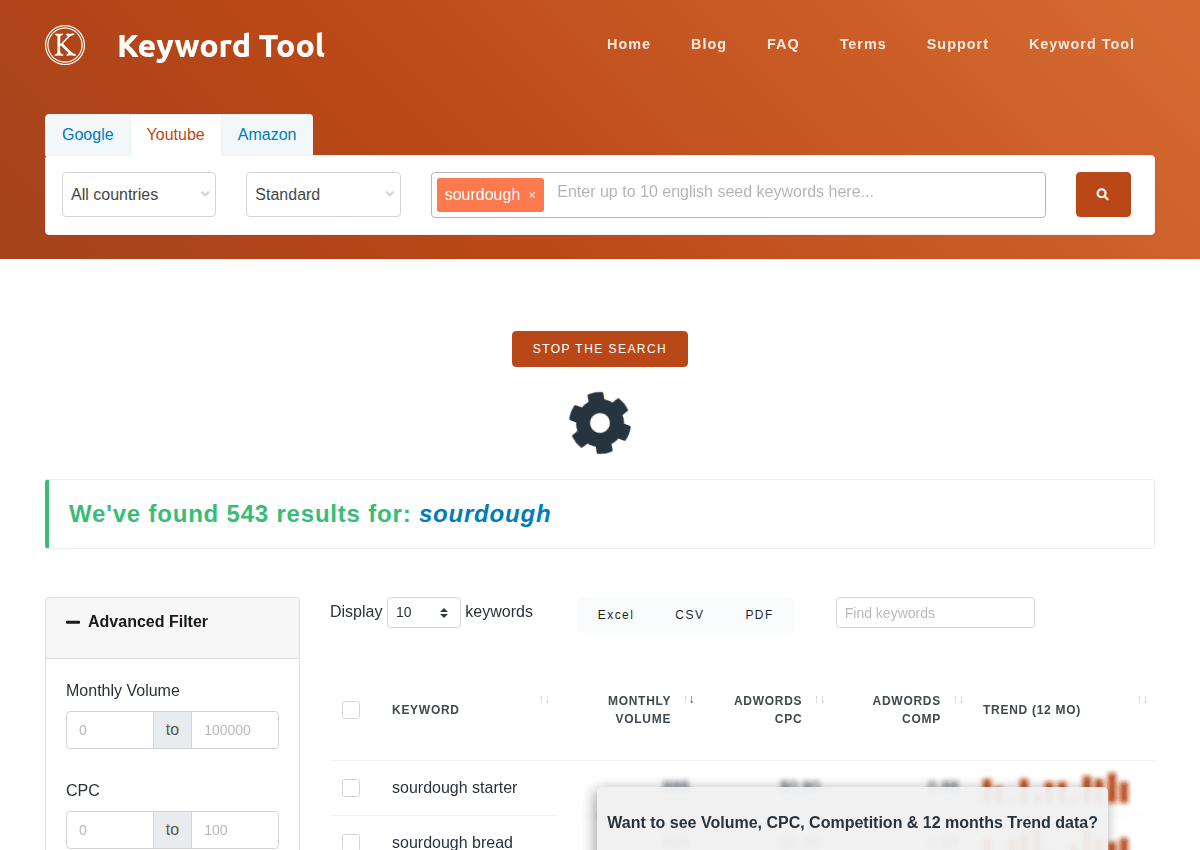
The YouTube tab on this site's tool mines those suggestions in bulk: seeds in, hundreds of real YouTube phrasings out, free.
Step 3: Add volume signals
YouTube publishes no volume data, so estimates fill the gap. The free YouTube Keyword Tool from Keywords Everywhere attaches monthly volume estimates to YouTube suggestions, 500 lookups a day without an account.
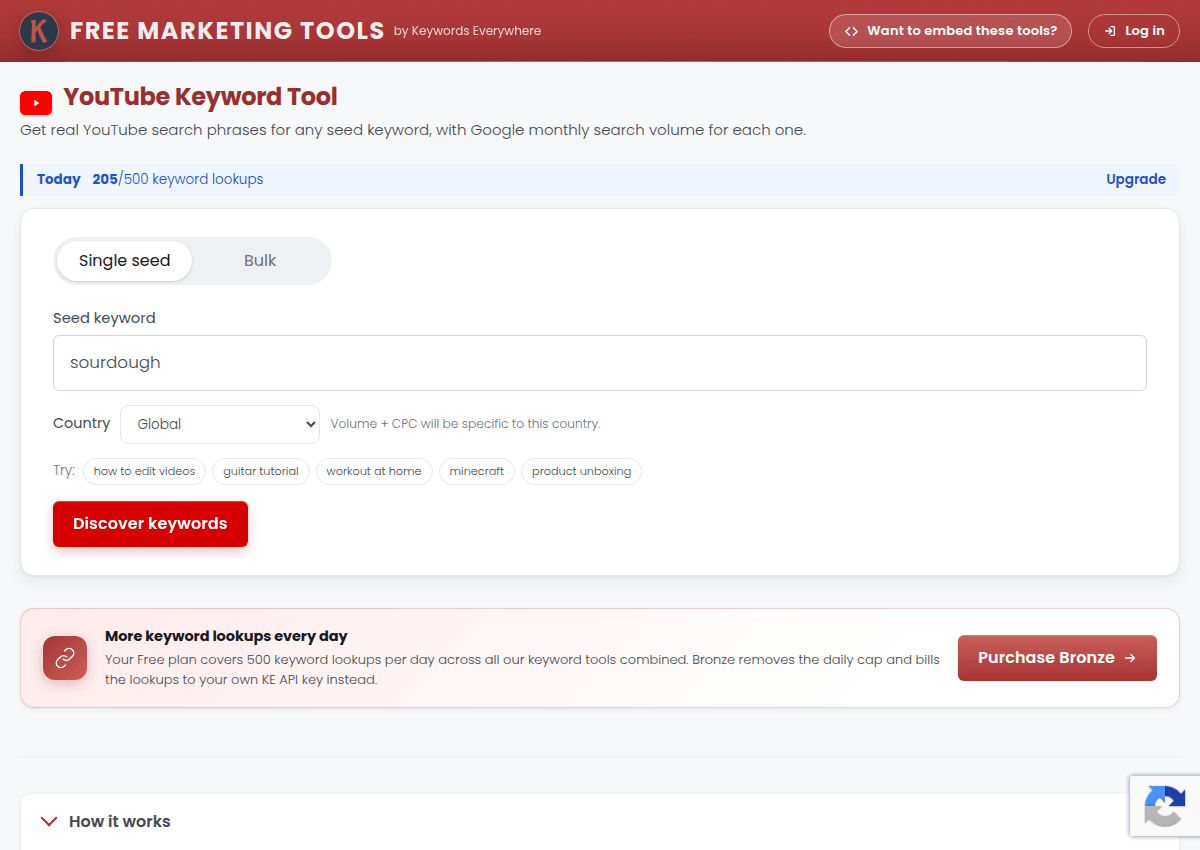
Use the numbers to rank your candidates against each other. Exact counts do not exist in this ecosystem, comparisons are enough.
Step 4: Judge the competition like a viewer
Search your candidate on YouTube and read the results like a bouncer, the same eyeball test we use for Google difficulty:
| Top results are | It means | Your move |
|---|---|---|
| Million-sub channels, recent uploads | Packaging war you will lose today | Go more specific |
| Big views on OLD videos | Demand alive, incumbents aging | Real opening |
| Small channels ranking | Search traffic is winnable here | Green light |
| Results miss the query's point | YouTube is settling | Best opening of all |
Old-but-ranking videos are the YouTube-specific gold: demand persists, and a sharper, current video takes the spot.
Step 5: Put the keyword where YouTube reads it
Say the keyword naturally in the first 30 seconds: the transcript is indexed, which makes the video itself metadata. Then stop optimizing and go film the next one.
The browse-traffic caveat
Search is one of YouTube's doors, not the biggest. Browse and suggested traffic run on packaging and retention, and keywords cannot rescue a dull thumbnail.
Keyword research picks topics with proven demand and words that match it. The video still has to earn the click and hold the viewer, and tools like vidIQ cover that performance side once you publish.
The one-line takeaway: mine YouTube's own suggestions for topics with proven demand, rank them with volume estimates, pick fights the eyeball test approves, then put the phrase in the title and say it out loud on camera.