The short verdict: for pure keyword research, Semrush gives you more keyword data per dollar and a friendlier workflow, while Ahrefs wins if you judge keywords the way it does, through the lens of backlinks and what actually ranks.
Both are excellent and both are overkill if you only need volumes for a keyword list. Here is the honest comparison, with 2026 pricing verified from both vendors' pages this July.
| Ahrefs | Semrush | |
|---|---|---|
| Entry price (annual billing) | $129/mo Lite, plus a $29/mo Starter | $117.33/mo SEO plan |
| Mid tier | $249/mo Standard | $248.17/mo Pro+ |
| Top standard tier | $449/mo Advanced | $455.67/mo Advanced |
| Tracked keywords (entry) | 750 | 500 |
| Tracked keywords (top) | 5,000 | 5,000 |
| Keyword tool | Keywords Explorer | Keyword Magic Tool |
| Difficulty score based on | Backlinks of the top 10 | Multiple factors incl. authority |
| Signature keyword metric | Traffic Potential per topic | Intent labels on every keyword |
| Free option | Free tools + own-site tier | Free account, ~10 searches/day |
The same job, two philosophies
Both suites answer "what should I target and can I win it". They just reason differently, and that difference decides which one fits you.
Ahrefs for keyword research
Ahrefs built its reputation on the crawler behind its backlink index, and its keyword tools inherit that DNA. Keywords Explorer scores difficulty from the backlink profiles of the current top 10, which makes its number honest and explainable.
Its standout keyword metric is Traffic Potential: instead of one keyword's volume, it estimates the traffic of the whole topic the top page ranks for. That single number stops you from chasing a big keyword whose page one already owns fifty variants of it.
The 2026 pricing: Lite at $129 a month with 750 tracked keywords, Standard at $249, Advanced at $449, plus a stripped-down $29 Starter. Keyword report limits tighten fast on the cheaper tiers, which is the most common complaint.
Semrush for keyword research
Semrush is the broader marketing suite, and its Keyword Magic Tool is arguably the best pure keyword-list builder in the business. Type a seed and you get grouped suggestions, question filters, and an intent label (informational, commercial, transactional) on every row.
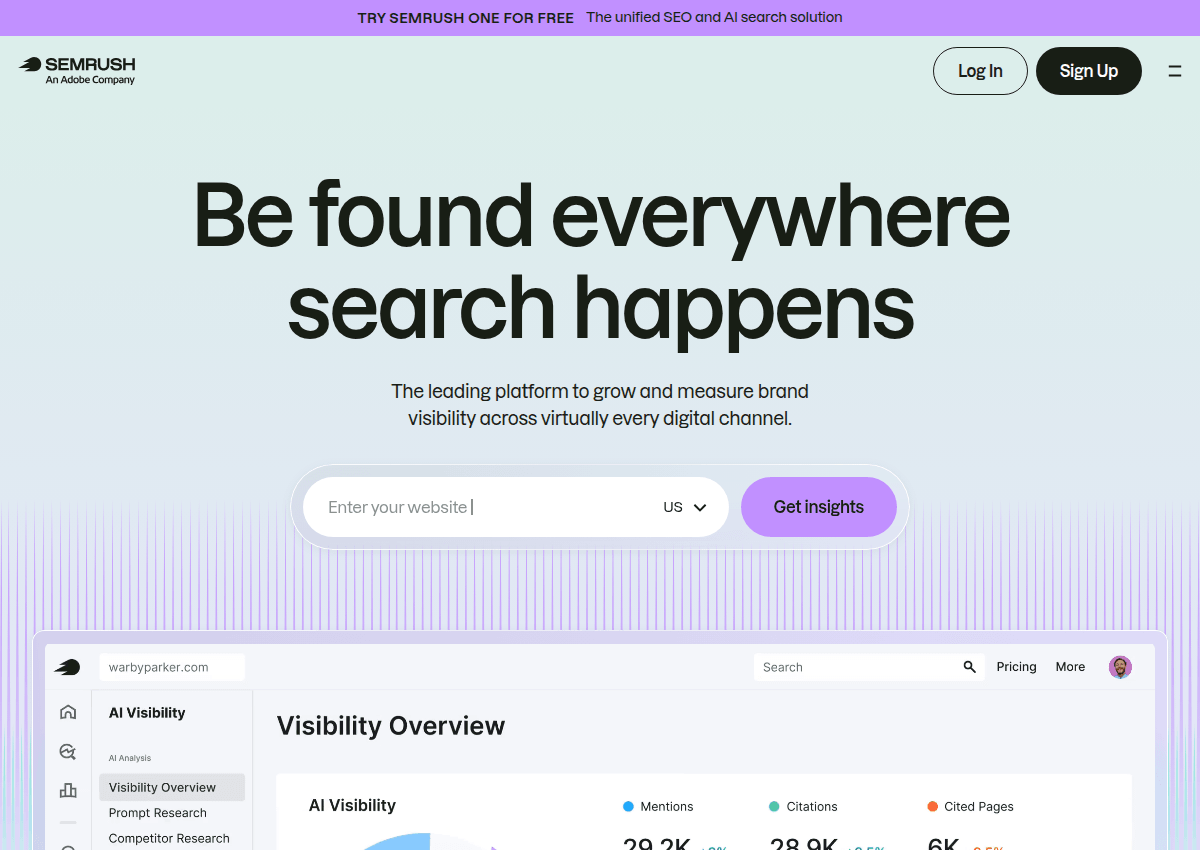
Those intent labels save real time. What takes ten minutes of manual sorting elsewhere is a filter click here, and for content planning at volume that adds up.
The 2026 pricing after its plan restructure: the SEO plan at $117.33 a month on annual billing with 500 tracked keywords, Starter at $165.17 (adds AI visibility tracking), Pro+ at $248.17, Advanced at $455.67. Monthly billing runs higher, and both vendors bury that in the toggle.
Choose Ahrefs if...
- You judge keywords by whether you can out-link the current top 10, because its difficulty score is built exactly that way.
- Topic-level Traffic Potential matters more to you than single-keyword volume.
- Backlink analysis is half of why you are paying at all.
Choose Semrush if...
- You build big keyword maps and want intent labels and grouping done for you.
- Your work spreads beyond SEO into ads, social and content workflows.
- You want the slightly cheaper entry into a full suite ($117.33 vs $129).
The budget reality check
Both suites start at roughly $1,400 a year, and most of that buys features beyond keyword data: site audits, backlink indexes, rank tracking, reporting.
If keyword volumes are genuinely all you need, free and cheap routes cover it: Google Keyword Planner shows ranges for nothing, and credit-based options like Keywords Everywhere attach volumes to any keyword list for a few dollars. Our free keyword tools roundup covers that whole path.
The suites earn their price when you use the suite. They are a bad way to buy a volume column.
How we compared them
Pricing and plan limits were pulled from both vendors' public pricing pages in July 2026, on annual billing unless stated. Feature descriptions reflect the current products, not legacy reviews.
Neither company sponsors this site, and this page has no affiliate links. The comparison exists because "Ahrefs vs Semrush" is the question every keyword-tool shopper eventually asks.
The one-line takeaway: Semrush for keyword-list building and intent at slightly less money, Ahrefs for link-based difficulty and Traffic Potential. And neither if all you actually need is a volume column on a list you already have.